

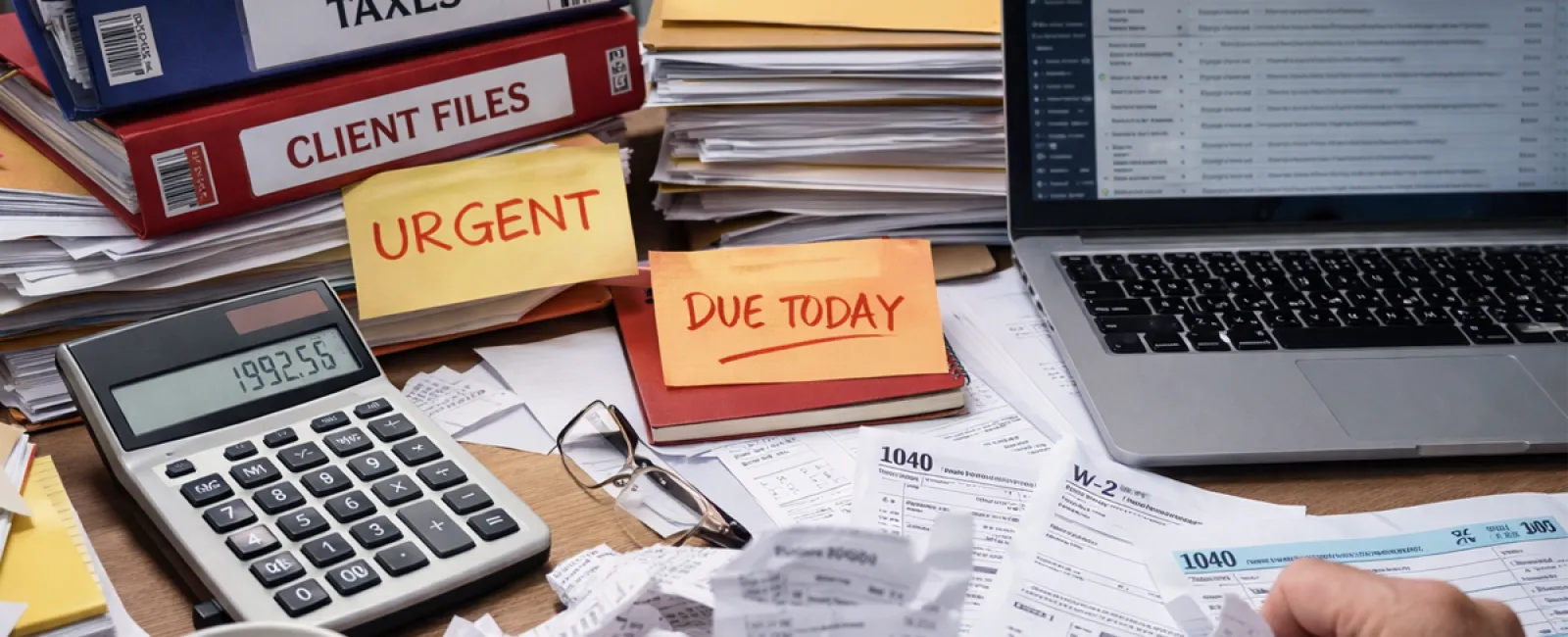
March has arrived.
Your accountant is overwhelmed, your bookkeeper is rushing against the clock, and deadlines are tightening. Emails flood in faster than anyone can handle.
Everyone is heads-down, struggling to get through the whirlwind of the month.
You know this stress all too well.
Unfortunately, so do cybercriminals.
Studies reveal a dramatic surge in phishing attacks during tax season, with March seeing about a 28% rise in tax-related scam emails compared to quieter times. These scams are subtle, blending seamlessly into regular business communications at the busiest time of year.
This is no accident.
It's strategic timing.
Here's what to expect—and four straightforward strategies to shield your business from becoming an easy mark.
Supply Chain Under Pressure
What many overlook is:
Hackers aren't solely aiming at accounting offices.
They exploit the chaos within the system.
During tax season:
- Clients hurriedly send sensitive documents
- Staff skip standard checks to keep up with the demand
- "Just send it" replaces usual caution
- Verification steps fall by the wayside amidst the rush
The entire workflow accelerates.
And when things move fast, mistakes happen.
Hackers target overloaded, hurried businesses—not calm, methodical ones.
March is their prime moment.
Recognizing These Attacks
This isn't fiction.
These phishing emails are crafted to look like any typical message in your inbox.
- A note from "your accountant" requesting to resend W-2s due to a glitch
- A vendor email updating bank details that needs immediate action
- A DocuSign request for signing a time-sensitive tax document
- An urgent message from "your CEO" asking for immediate help while traveling
These messages feel ordinary.
Exactly why they successfully deceive during tax season.
Why Busy Professionals Fall for These Scams
It's not negligence.
It's human nature.
Swamped inboxes and looming deadlines cause people to scan instead of thoroughly read, make assumptions, and act quickly.
Scammers exploit this behavior.
Their emails are designed for distracted eyes, catching that tiny inconsistency no one notices when rushing.
During March, nearly everyone is rushing.
Four Easy Habits to Avoid Becoming A Target
You don't need high-tech defenses or a specialized team to cut your risk.
Simple, mindful practices during high-pressure periods can protect you.
1. Confirm payment changes by phone
If an email notifies you of a vendor's updated banking details, don't just reply.
Call a trusted, saved number to verify directly.
This precaution blocks many costly scams.
2. Pause urgent requests for sensitive data
Urgency signals a need to slow down, not speed up.
If someone demands immediate tax forms, financial files, or W-2s, pause and confirm.
Genuine senders respect caution; scammers don't.
3. Verify "urgent" messages with another contact method
If an email claims urgency, cross-check via a quick phone call, text, or internal chat.
Real emergencies withstand a brief check; phony ones collapse.
4. Alert your team about phishing risks
Remind your staff this week that tax season spikes scam attempts.
Encourage them to slow down, double-check details, and voice concerns.
Empowering your team reduces costly mistakes significantly.
Key Takeaway
Tax season is demanding enough—don't let scams add to your troubles.
These attacks aren't highly sophisticated, just perfectly timed.
They exploit rushed moments, assumptions, and the drive to power through March.
By slowing down and verifying urgent requests, you can avoid becoming a victim.
Often, that simple shift is enough to stay safe.
Perform a Quick Busy-Season Checkup
Your business might already have great protocols—which is excellent.
If tax season sends your team into reactive mode or you're unsure how urgent requests are handled, consider a complimentary 15-Minute Discovery Call for peace of mind.
No gimmicks. No pressure. Just a straightforward review to identify small habit changes that prevent major headaches.
If this message isn't for you, please forward it to someone who would benefit.
Click here or give us a call at 214-845-8198 to schedule your free 15-Minute Discovery Call.


